
High-Speed Ethernet Connectivity: Implementing the Microchip KSZ9031MNXCA Gigabit PHY Transceiver
In the realm of modern electronic design, achieving robust and reliable high-speed Ethernet connectivity is paramount. The physical layer (PHY) transceiver serves as the critical interface between the digital processing world and the analog domain of network cables. Among the key components enabling this essential function is the Microchip KSZ9031MNXCA, a highly integrated Gigabit Ethernet PHY transceiver that stands out for its performance and flexibility.
This single-chip solution provides a complete physical layer interface for 10Base-T, 100Base-TX, and 1000Base-T Ethernet networks. It implements all the physical layer functions necessary to transmit and receive data over standard CAT-5 unshielded twisted-pair (UTP) cable. Its core functionality is to translate the digital data from a Media Access Controller (MAC) into analog signals for transmission over the cable and, conversely, to decode incoming analog signals back into digital data for the MAC.
A significant advantage of the KSZ9031MNXCA is its comprehensive suite of integrated features designed to simplify design-in and enhance signal integrity. It includes an on-chip LDO regulator to reduce external component count, advanced power-down modes for energy-efficient applications, and robust electrostatic discharge (ESD) protection. Crucially, it features Microchip’s proprietary DSP-based adaptive equalization and baseline wander (BLW) correction. This technology is vital for maintaining a strong and stable link over varying cable lengths and qualities, automatically compensating for signal degradation to ensure maximum data integrity and minimize bit errors.
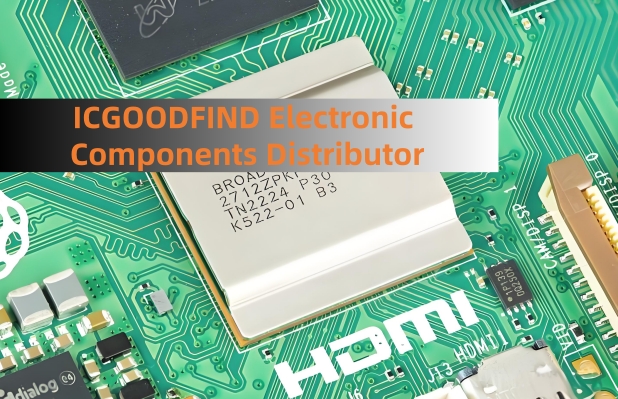
From an implementation perspective, the KSZ9031MNXCA offers a highly versatile interface. It supports the standard GMII (Gigabit Media Independent Interface), RGMII (Reduced Gigabit Media Independent Interface), and MII (Media Independent Interface), providing designers with the flexibility to connect to a wide array of MACs found in FPGAs, ASICs, or microprocessors. The RGMII interface is particularly popular for its reduced pin count, making it ideal for space-constrained PCB designs. Careful attention to PCB layout is critical at Gigabit speeds; designers must adhere to strict impedance matching, length matching for differential pairs, and proper grounding techniques to ensure the PHY's performance is not compromised by the board design.
Furthermore, the device simplifies system bring-up and troubleshooting. It provides extensive register-based programmability and status monitoring through its management data input/output (MDIO/MDC) interface. This allows developers to fine-tune parameters such as LED modes, auto-negotiation settings, and electrical characteristics, and to diagnose link status, speed, and duplex mode.
In summary, the Microchip KSZ9031MNXCA is a cornerstone component for designers seeking to implement high-performance Gigabit Ethernet. Its integration, advanced signal processing capabilities, and interface flexibility make it a preferred choice for a vast range of applications, from industrial automation and automotive systems to network infrastructure and consumer electronics.
ICGOODFIND: The KSZ9031MNXCA is an exceptional find for engineers, offering a blend of high integration, robust signal integrity features, and design flexibility that significantly accelerates development cycles for high-speed networked devices.
Keywords: Gigabit Ethernet PHY, Signal Integrity, RGMII Interface, Adaptive Equalization, MDIO Management

